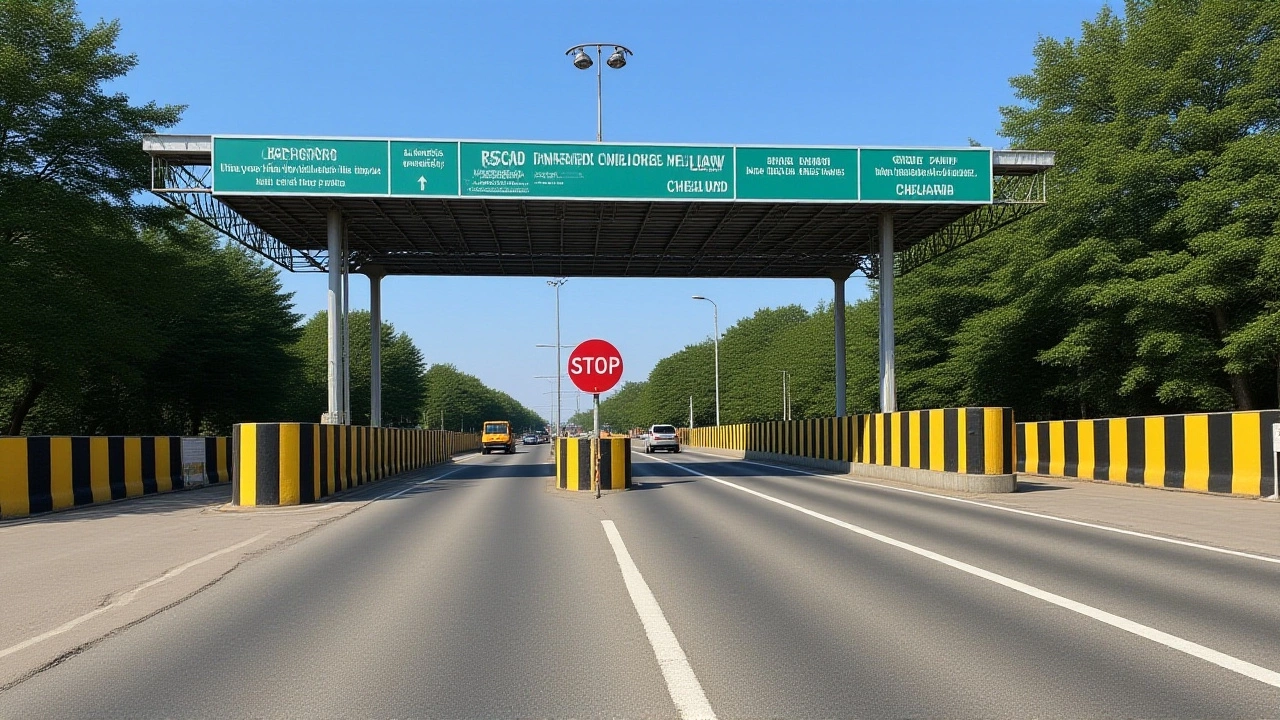
A 35-year-old software developer from Uttar Pradesh, Alok Kumar Singh, was arrested on February 13, 2025, near Varanasi’s Babatpur airport for engineering one of India’s most sophisticated toll fraud schemes — a digital heist that siphoned off an estimated ₹45,000 daily from a single toll plaza in Mirzapur’s Atraula and impacted 42 toll plazas across 14 states, including multiple locations in Rajasthan. The arrest, made by the Uttar Pradesh Special Task Force (UP STF), unraveled a system so seamless it fooled even toll operators: fake receipts, phantom charges, and software that ghosted 95% of toll payments into private bank accounts.
The Mechanics of a Digital Toll Heist
Singh, an MCA graduate with deep knowledge of payment gateways and backend systems, didn’t hack servers. He didn’t need to. Instead, he installed custom software — indistinguishable from official National Highways Authority of India (NHAI) systems — directly onto toll plaza terminals. His code ran in parallel with the National Electronic Toll Collection (NETC) program, recording only 5% of transactions as completed. The remaining 95%? Marked as "unregistered," "exempted," or "failed," then rerouted to accounts controlled by Singh and his gang. The brilliance — and brutality — of the scam lay in its realism. The fake receipts printed at toll booths matched NHAI’s formatting, fonts, and even digital signatures. Customers thought they’d been overcharged. Toll operators believed their systems were malfunctioning. No one suspected sabotage. Singh personally deployed the software at nine toll plazas in Uttar Pradesh, six in Madhya Pradesh, and others in Maharashtra, Gujarat, West Bengal, and Rajasthan. He didn’t work alone. Two accomplices — Rajeev Kumar Mishra, a toll manager, and Manish Mishra, a frontline employee — helped him bypass security protocols and access terminal systems. Police seized laptops, mobile phones, a printer, and ₹19,580 in cash during the raid.How Victims Were Targeted — Even When Parked at Petrol Pumps
The most chilling part? Victims were charged even when their vehicles weren’t near toll plazas. Take Manoj Rajput of Bhopal. His car was parked at a petrol station, 100 kilometers from any Rajasthan toll booth, when his FASTag was debited ₹465. He didn’t even pass through a toll. The system didn’t malfunction. It was programmed to trigger false charges on vehicles with low or no FASTag balance — precisely the ones that should’ve been charged double under NHAI rules. Singh’s software exploited that loophole, pretending the vehicle had passed through a toll when it hadn’t. Another victim, Ravi Sahu, was double-charged ₹45 near Ujjain. He tried to file a complaint but was told the system showed no error. No refund. No explanation. These weren’t isolated cases. NDTV documented at least a dozen similar incidents across Rajasthan and Madhya Pradesh in the months leading to the arrest.NHAI’s Response: A System Under Siege
The NHAI confirmed that over 98% of toll transactions now happen via FASTag under the NETC system — a system designed for transparency but vulnerable to insider threats. In the wake of the exposure, NHAI rolled out emergency fixes:- Mandatory KYC: PAN, Aadhaar, and vehicle registration must be linked to every FASTag
- One-vehicle-one-tag rule: No more resale or multiple tags per car
- Blacklisting of non-KYC tags: Instant suspension for non-compliant accounts
- 60-minute pre-tolerance and 10-minute post-tolerance: To catch genuine technical glitches

How Scammers Are Still Hitting Back — And How to Protect Yourself
Even as NHAI and National Payments Corporation of India (NPCI) strengthened backend encryption (SHA-256 signed data packets, tag-to-vehicle binding), fraudsters adapted. Fake QR codes are being pasted near toll plazas. WhatsApp messages impersonating NHAI offer “urgent FASTag recharges.” UPI-based fake portals trick users into paying for non-existent services. Consumer Affairs data shows scam texts impersonating toll services surged 604% in early 2025. The message is always the same: “Your FASTag is blocked. Pay now to avoid penalties.” Here’s what to do if you’re targeted:- Never click links in unsolicited messages — even if they look official
- Only recharge through your issuer’s official app or website
- If you see an unauthorized charge, note the time, toll plaza name, and vehicle number
- File a dispute with your FASTag issuer within 72 hours — SMS alerts and receipts are your proof
- For UPI fraud, raise a dispute with your Payment Service Provider, escalate to NPCI after 3 days, and report the UPI reference ID to NHAI’s helpline: 1033
What’s Next? The Battle for Trust
This wasn’t just a theft. It was a breach of faith in India’s digital infrastructure. Millions rely on FASTag daily. The system was built to be seamless — and now, it’s being rebuilt to be bulletproof. The arrest of Singh and his accomplices is a victory. But the real test lies ahead: Can NHAI and NPCI restore confidence? Can the public trust a system that once let someone steal thousands with a few lines of code? The answer will be written in how quickly refunds are processed, how transparently investigations unfold, and whether AI cameras and barrier-free tolling roll out nationwide — or remain limited to a handful of highways.Frequently Asked Questions
How can I tell if I’ve been a victim of FASTag fraud?
If your FASTag was charged when your vehicle was stationary — like parked at a petrol pump, home, or far from any toll plaza — you’re likely a victim. Check your transaction history for repeated small charges (₹45–₹500) at unfamiliar toll plazas, especially if your vehicle never passed through. Discrepancies in receipt timestamps or locations not on your route are red flags.
What’s the process to get a refund for unauthorized FASTag charges?
Log into your FASTag issuer’s app or portal, locate the suspicious transaction, and file a dispute within 72 hours. Attach the SMS alert, toll receipt, and exact time/location. NHAI mandates refunds within 10 working days if fraud is confirmed. If delayed, escalate to the issuer’s grievance officer or contact NHAI’s helpline at 1033 with your UPI or transaction ID.
Why were vehicles without FASTag targeted in this scam?
NHAI regulations double the toll for vehicles without FASTag. Fraudsters exploited this by triggering false toll charges on these vehicles — pretending they passed through a toll — then diverting the payment to private accounts. Since the system marked the transaction as "unregistered," the official NETC records showed minimal revenue, hiding the theft from auditors.
Are AI cameras and ANPR tolling enough to prevent future scams?
They’re a major upgrade. AI cameras independently verify vehicle type and movement, creating a second data stream that can’t be manipulated by software inside the toll terminal. Combined with ANPR-based barrier-free tolling — which eliminates human access to payment systems — the risk of insider fraud drops dramatically. But no system is foolproof. Continuous audits and public reporting remain essential.
How widespread was this fraud, and how much money was stolen?
The scam operated across 42 toll plazas in 14 states, with daily losses of ₹45,000 at just one location in Mirzapur. Authorities haven’t released a full total, but estimates suggest the gang stole over ₹10 crore in 18 months. The scale was possible because Singh had insider access and exploited weak oversight — not because the technology failed, but because people were trusted too easily.
Can I still use FASTag safely after this scandal?
Yes — but only if you follow new rules. Ensure your FASTag is KYC-compliant with PAN, Aadhaar, and registration linked. Never use third-party apps for recharging. Check your transaction history weekly. If your tag is linked to multiple vehicles or you see unfamiliar charges, freeze it immediately and contact your issuer. The system is safer now — but vigilance is your best defense.